
Phoenix metro · Arizona
Phoenix
The widest span of housing age and type anywhere in the Valley.
Phoenix contains more genuinely different housing markets than any other city in the state, and the differences are measured in decades rather than miles. A 1920s bungalow in a historic district, a 1950s citrus-grove ranch in Arcadia, a 1970s block home in the west, a Central Corridor high-rise unit and a 2020s house on the northern edge are all Phoenix.
They share almost nothing structurally. Construction era here is the single most useful lens, because it predicts the systems, the structure, the likely problems and the realistic scope of any work far better than the address does.
Housing and architectural character
The oldest stock sits in and around the historic districts near downtown and midtown — Willo, Encanto-Palmcroft, Coronado, F.Q. Story, Garfield and Roosevelt among them. Bungalows, period revival homes and early ranches from the 1910s through 1940s. Lath and plaster, original wood windows, shallow foundations, and systems that have usually been modified repeatedly rather than comprehensively renewed.
Arcadia is its own category: mid-century ranch homes on unusually large, irrigated lots that were once citrus groves, with Camelback Mountain in view. It has been a rebuild and heavy-renovation market for years, and a substantial proportion of what trades is bought for the lot and the setting.
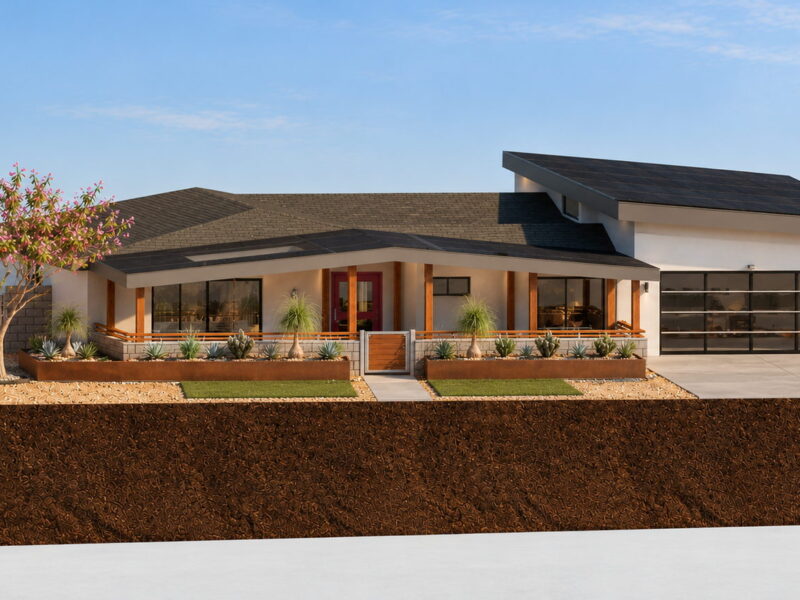
Post-war expansion produced enormous quantities of block ranch housing across central, west and south Phoenix — simple, robust, and often carrying real reconfiguration potential.
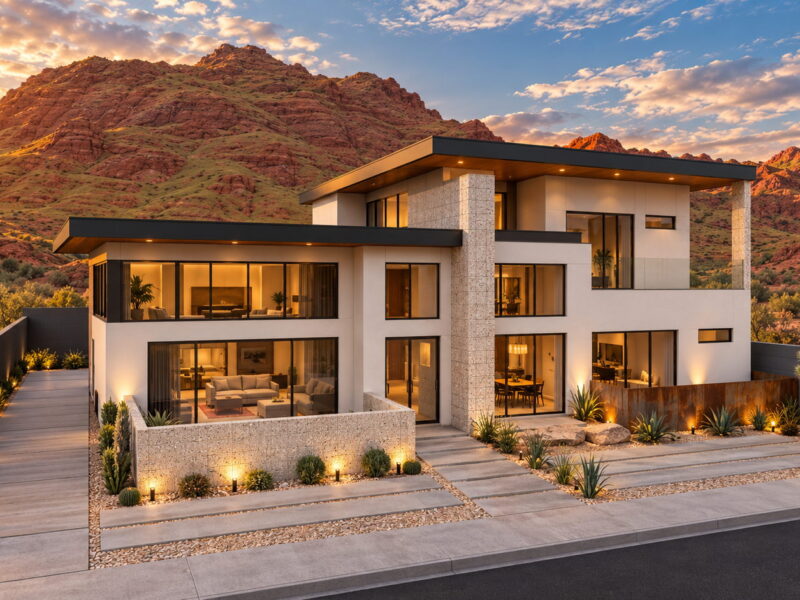
The Central Corridor adds mid- and high-rise condominium stock. North Phoenix, Desert View, Laveen and the southern and northern edges carry the newer subdivision housing, where the buildings are current and the questions are about location, builder and community rather than structure.
Areas and neighborhoods
Downtown and midtown hold the historic districts and the densest walkable fabric, along with the light rail corridor. Arcadia and the Biltmore area sit east and north-east with their own distinct markets.
Central and south Phoenix carry much of the post-war stock and the most active value-add opportunity. Ahwatukee sits south of South Mountain and functions almost as a separate suburb. North Phoenix, Desert View and Deer Valley are newer and more conventionally suburban. Laveen and the south-west edge have seen sustained newer development.
These are not interchangeable. Each has its own construction era, its own rules and its own buyer.
Location and lifestyle context
Phoenix is the employment center of the metro and the transport hub, with Sky Harbor close to the core and the light rail line running through downtown and midtown into Tempe and Mesa. For anyone whose daily pattern is central, living centrally genuinely changes the day.
The historic districts offer mature tree canopy and walkability that are rare in the Valley and effectively cannot be built new. That is a real amenity, and it comes attached to older houses with older systems.
Further out, the pattern is conventional suburban: newer housing, more space, more driving.
Investor relevance
Phoenix is the most genuinely investable market in the metro, and the one where a construction perspective changes outcomes most.
Small multifamily is real here in a way it is not in most of the Valley. Duplexes, triplexes and fourplexes exist in and around the central and midtown areas, much of it built mid-century. The physical condition of these buildings varies enormously, and the significant costs are usually the shared systems — roofs, electrical services, sewer laterals, and mechanical equipment — rather than the unit interiors that show in photographs.
Value-add on single-family is widely available across the post-war stock. Block construction with simple roof framing is frequently forgiving of layout change, which is exactly what makes a dated but sound house worth more than it appears.
The historic districts require a different approach. Properties in a historic preservation overlay are subject to review that affects exterior alterations, and that changes what a renovation can do and how long it takes. This is not a reason to avoid them — it is a reason to understand the rules before underwriting a project on the assumption that you can do as you like.
Build-to-rent and larger institutional activity are present in the newer outer areas, which affects competition for certain product types.
Land and site considerations
Phoenix land is infill land. There is no meaningful greenfield in the established parts of the city, and what trades is generally individual lots, teardown candidates or small assemblages.
The questions differ from a desert parcel. Utilities are usually present, so the issues become what the zoning permits, whether the lot has any historic or overlay designation attached to it, what the setbacks and lot coverage allow, and what the existing site conditions are — including whatever was there before.
Alleys, irrigation easements and older utility routing are common in the central areas and can meaningfully affect what can be built and where.
On the outer edges, larger parcels still exist and behave more conventionally, with the usual questions about infrastructure timing and access.
Development context
Phoenix has actively encouraged density along its light rail corridor and in and around downtown, and there is sustained mid-rise and mixed-use activity there. That is the most dynamic development context in the metro.
Elsewhere, development is infill at a smaller scale — individual lots, small subdivisions, and the steady replacement of aging housing in areas where land value has caught up with building value.
Historic preservation overlays are a genuine factor near the core. So is the fact that much of the central city was laid out long before current standards, which shows up in lot dimensions, alley access and utility arrangements.
Buying in Phoenix
Establish the construction era first — it tells you more than anything else about what you are taking on.
On pre-war houses, expect to look closely at the electrical service, the plumbing supply and drain material, the foundation, and whether previous alterations were done properly. Many of these homes have been modified repeatedly over a century, and the quality of that work varies enormously.
On post-war block homes, the structure is usually straightforward and the questions are roof, systems and whether the layout can be opened up.
In a historic district, understand the overlay before you plan changes. It governs exterior work and is enforced.
On newer homes, the building is generally current and the diligence shifts to location, community and builder.
Selling in Phoenix
Phoenix buyers are segmented by era as sharply as sellers are, and the winning presentation differs completely between them.
A historic home sells on character, period detail and the credibility of its updates — buyers pay for original features that have been properly maintained and are wary of unpermitted or poorly executed work.
A post-war home frequently sells on potential, and showing that potential credibly is worth real money. A buyer who can see what the house could become behaves differently from one who only sees dated finishes.
An investment property sells on the numbers and the condition of the shared systems, and documentation of roof, electrical and plumbing work does more than any staging.
Permit history matters here more than in newer cities. Work that cannot be evidenced becomes a negotiating point.
My perspective here
Phoenix rewards knowing what is behind the wall, because a century of building practice is represented here and each era fails and succeeds differently.
Grace’s background spans structural and architectural design, mechanical, plumbing and electrical coordination, and running construction on complex projects. Applied here, that means reading whether a post-war layout can be opened up, what a pre-war system replacement really involves, or which shared systems will decide the economics of a small multifamily building — before those become discoveries during construction.
This perspective informs how a property is evaluated. It does not replace the inspectors, engineers, architects, appraisers or attorneys whose work it is — it means knowing what to ask them, and how to read the answers. More about that background
Common questions about Phoenix
What does a historic district overlay mean for renovations?
It generally means exterior alterations visible from the street are subject to review, which affects windows, roofing, additions and facade changes. Interiors are usually less constrained. It is entirely workable, but it changes both scope and timeline, so it belongs in your planning before you buy rather than after.
Is small multifamily in central Phoenix a good entry point?
It is one of the few places in the metro where that stock genuinely exists at small scale. Whether a specific building works depends far more on its shared systems than its unit finishes — roof, electrical service, sewer lateral and mechanical equipment are where the significant costs sit, and they are not visible in listing photographs.
Why are Arcadia properties priced the way they are?
Because a substantial share of the value sits in the lot rather than the house — large irrigated parcels, mature landscaping and the setting against Camelback Mountain. Many transactions there are followed by heavy renovation or replacement, so the existing structure is frequently not what is being paid for.
Are older Phoenix homes worth taking on?
Frequently, provided you understand what you are buying. Post-war block construction is often very forgiving of layout change. Pre-war homes carry more system and foundation risk but also character that cannot be reproduced. The deciding factor is the specific house, and that can be assessed before you commit.